
Migraines can seem confusing because they do not always present themselves the same way. Some days the pain feels sharp and intense, while on other days it feels dull, heavy, and exhausting. For some people, it starts after stress or lack of sleep. For others, it may come after missing meals, eating spicy food, or spending too much time on screens. This is exactly why many people struggle to find lasting relief and keep depending on temporary solutions.
The truth is simple — not all migraines are equal. In Ayurveda, migraine is not just one problem according to Ayurveda. It is learned through your dosha, lifestyle patterns, daily habits and food triggers, symptoms that arise, and internal imbalance. This is when having knowledge about the Migraine Types can be useful, helping you to listen to what your body is telling you and move toward the right healing path instead of only managing the pain again and again.
At Sarvagun Ayurveda, we often see people who have tried painkillers, home remedies, and diet changes but still keep getting migraines repeatedly. In many cases, the real issue is that they were treating the pain but not their actual migraine type. When the root cause is understood properly, healing becomes more meaningful, more personalized, and much more effective.
Common Migraine Symptoms You Should Not Ignore

Migraine is more than just a headache. It can impact your mood, digestion, sleep, energy, and daily routine.
Some common migraine symptoms include:
- One-sided headache
- Nausea or vomiting
- Sensitivity to light
- Sensitivity to sound
- Throbbing or pulsating pain
- Heaviness in the head
- Burning or pressure-like sensation
- Irritability or restlessness before the pain starts
If these symptoms continue repeating, your body is trying to tell you something. Instead of only extinguishing the pain, it is important to understand what kind of migraine pattern you have.
In Ayurveda, this pattern often relates to Vata, Pitta, or Kapha imbalance.
Understanding Migraine in Ayurveda
In Ayurvedic science, recurring migraine-like headaches are often understood under conditions like Ardhavabhedaka, where pain can affect one side of the head and come repeatedly.
Ayurveda believes that different people experience migraine differently because their dosha imbalance is different.
The three main doshas are:
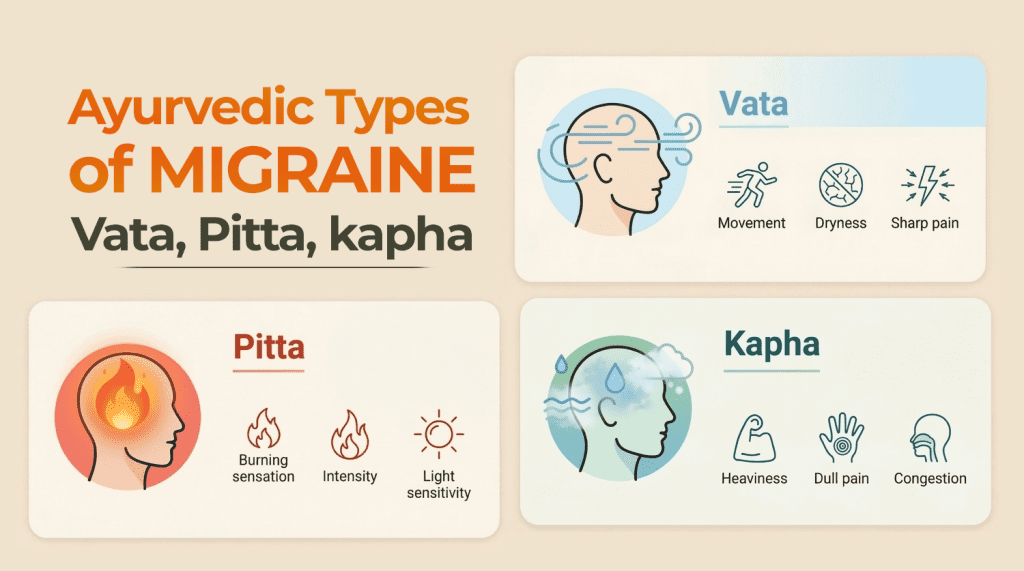
- Vata – linked with movement, nerves, dryness, irregularity
- Pitta – linked with heat, intensity, digestion, sharpness
- Kapha – linked with heaviness, stability, mucus, sluggishness
When one of these doshas becomes aggravated, migraine symptoms can appear in a different way.
This is why identifying your migraine type matters.
Vata Type Migraine: Stress & Irregular Lifestyle
If your migraines seem unpredictable, come after stress, and feel like they “move around” or throb strongly, this may be Vata type migraine.
What usually triggers Vata migraine?
Vata gets disturbed when life becomes too irregular, rushed, or mentally exhausting.
Common triggers include:
- Stress and overthinking
- Lack of sleep
- Skipping meals
- Long travel
- Anxiety
- Excess screen time
- Working late nights
- Dry, cold, or light food in excess
Common symptoms of Vata type migraine
You may notice:
- Throbbing or pulsating headache
- Pain that shifts from one side to another
- Dryness, weakness, or tiredness
- Light sleep or disturbed sleep
- Headache after stress or exhaustion
- Restlessness or nervousness before pain starting
A relatable example
This is common in people who have busy, irregular routines.
For example, if you often:
- Wake up late one day and early the next
- Skip breakfast
- Drink tea or coffee instead of proper meals
- Sleep after midnight
- Carry mental tension throughout the day
your migraine may be strongly linked to Vata imbalance.
Pitta Type Migraine: Heat & Intensity
If your migraine feels intense, burning, irritating, and gets worse with heat, spicy food, or anger, it may be Pitta type migraine.
What usually triggers Pitta migraine?
Pitta rises when there is excess internal heat in the body.
Common triggers include:
- Spicy, oily, fried food
- Excess tea or coffee
- Long exposure to sun or heat
- Anger, frustration, or irritability
- Acidic digestion or acidity
- Skipping meals and then overeating
- Working under constant pressure
Common symptoms of Pitta type migraine
You may notice:
- Burning sensation in the head or eyes
- Sharp or intense headache
- Sensitivity to sunlight
- Irritation or anger during migraine
- Acidity or nausea along with headache
- Feeling hot or flushed
- Pain that worsens in afternoon or after heat exposure
A relatable example
This type is very common in modern lifestyle patterns.
For example, if your routine includes:
- Long office hours
- Fast food and spicy snacks
- Too much caffeine
- Heat exposure while travelling
- Stress mixed with irritation or frustration
your body may be showing signs of Pitta aggravation.
What Ayurveda sees here
Pitta migraine often reflects internal heat and inflammation-like imbalance. This is why the pain can feel sharper, hotter, and more intense.
If your migraine often comes with acidity, anger, or heat sensitivity, your body may need a cooling, calming approach instead of just temporary symptom control.
Kapha Type Migraine: Heaviness & Sluggishness
If your headache feels dull, heavy, slow, and often comes with laziness, congestion, or mental fog, this may be Kapha type migraine.
What usually triggers Kapha migraine?
Kapha increases when there is too much heaviness, stagnation, and low movement in the body.
Common triggers include:
- Heavy, oily, sweet food
- Overeating
- Daytime sleeping
- Lack of physical activity
- Too much dairy or cold food
- Slow digestion
- Sedentary routine
Common symptoms of Kapha type migraine
You may notice:
- Dull or pressure-like headache
- Heaviness in the forehead or whole head
- Sleepiness or sluggishness
- Congestion or blocked feeling
- Low appetite or slow digestion
- Feeling mentally cloudy or inactive
A relatable example
This is common in people who have a low-movement lifestyle.
For example, if you often:
- Sit for long hours
- Eat heavy meals late
- Sleep after lunch
- Avoid exercise
- Feel bloated or heavy often
your migraine may be linked to Kapha imbalance.
What Ayurveda sees here
Kapha migraine is usually not “explosive” like Pitta or “restless” like Vata. It often feels slow, blocked, and heavy. Many people ignore it in the beginning because it does not always feel dramatic — but over time, it can become frequent and exhausting.
Which Type Matches Your Migraine?
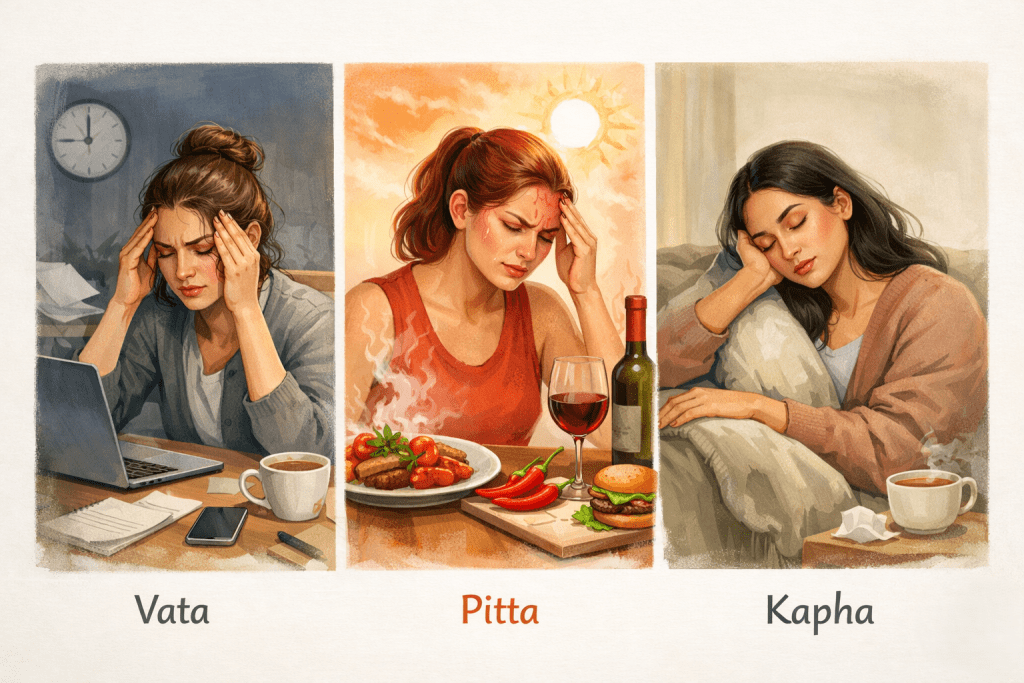
If you are still unsure, this quick comparison may help.
Your migraine may be Vata type if:
- It gets worse with stress
- You have irregular sleep or meals
- Pain is throbbing, shifting, or unpredictable
- You feel anxious, tired, or mentally exhausted
Your migraine may be Pitta type if:
- It gets worse with heat, spicy food, or anger
- Pain feels sharp, burning, or intense
- You face acidity or irritation quite frequently
- It gets worse in the sunlight or heat of the afternoon
Your migraine may be Kapha type if:
- It gets worse with heavy food or inactivity
- Pain feels dull, slow, and heavy
- You often feel sluggish or sleepy
- Congestion or mental fog comes with it
Important note
Many people do not fit into just one box. Sometimes migraine can be mixed type, like:
- Vata-Pitta: stress + burning pain
- Kapha-Pitta: heaviness + heat
- Vata-Kapha: throbbing + dull pressure
That is why self-identification is useful, but a professional Ayurvedic assessment makes way more sense.
How Sarvagun Ayurveda Treats Different Types of Migraine
At Sarvagun Ayurveda, migraine care is not handled with a one-size-fits-all approach.
The focus is on understanding why your migraine keeps coming back and what your body really needs.
1. Personalized Dosha Analysis
The first step is understanding your body type and migraine pattern.
This may include looking at:
- Your symptoms
- Food triggers
- Sleep cycle
- Stress levels
- Digestion
- Daily routine
- Emotional patterns
This helps identify whether your migraine is more related to Vata, Pitta, Kapha, or a mixed dosha imbalance.
2. Customized Ayurvedic Treatment Plan
Once your migraine type is understood, a personalized treatment plan may be suggested based on your needs.
This may include:
- Ayurvedic medicines
- Dietary guidance
- Lifestyle correction
- Stress-supportive healing recommendations
- Digestive balancing support
This personalized direction is important because the same plan should not be given to every migraine patient.
3. Panchakarma Therapies for Deeper Healing
For many chronic or recurring cases, Panchakarma therapies may play an important role in Ayurvedic migraine management.
Depending on the individual, therapies may be advised to support:
- Dosha balancing
- Relaxation of the nervous system
- Removal of accumulated toxins
- Better circulation and calmness
- Head and sinus relief
These therapies are selected specifically due to your body condition, not at random.
4. Online Consultation for Easy Access
Not everyone can visit immediately, and that is understandable.
That is why Sarvagun Ayurveda also offers online consultations, so you can begin your healing journey from home and get proper Ayurvedic guidance without delay.
If your migraine is interfering with work, sleep, family time or peace of mind, waiting too long to treat it typically only makes it more difficult.
An early consult can help you figure out what your body has been trying to inform you.
Simple Tips to Balance Your Dosha Naturally

Along with treatment, small daily changes can make a big difference.
Here are some easy supportive habits based on different Types of Migraine.
For Vata Type Migraine
If your migraine is linked to stress, irregular routine, and nervous tension:
- Eat meals on time
- Sleep at a fixed hour
- Reduce overthinking and screen overload
- Avoid skipping meals
- Prefer warm, simple, nourishing food
- Create a calm bedtime routine
For Pitta Type Migraine
If your migraine is linked to heat, acidity, and intensity:
- Reduce spicy, oily, and fried foods
- Avoid too much tea and coffee
- Stay hydrated
- Do not skip meals
- Avoid long heat exposure
- Practice cooling and calming habits
For Kapha Type Migraine
If your migraine is linked to heaviness and sluggishness:
- Avoid overeating
- Reduce very heavy, oily, and cold foods
- Stay physically active
- Avoid sleeping during the day
- Keep digestion light and active
- Start your morning with movement
Conclusion
If your migraines keep coming back, your body is not just making pain without reason. It is giving signals that something deeper may be out of balanceThe problem is that most of us are taught to just end the suffering for now, but we do not understand its pattern. This is where Ayurveda brings a new perspective, by addressing the cause instead of the symptom.
When you understand whether your migraine is more related to Vata, Pitta, or Kapha, things become much clearer. You begin to understand why it happens, what triggers it, why it keeps coming back, and what kind of healing support may actually help your body. At Sarvagun Ayurveda is not about instant remedy, but enabling you to recognize your body, include balance and transition towards more natural and personalized caring.
If you are dealing with chronic headaches, migraine attacks or symptoms that continue to interfere with your daily life, it might be the time to do something about it. With support like dosha analysis, personalized Ayurvedic treatment, Panchakarma therapies, and online consultation, Sarvagun Ayurveda can help you take a more root-cause-based path toward long-term relief. Schedule a consultation today and start on your path to natural migraine relief.
FAQ’s
Yes, absolutely. Most people have mixed dosha patterns like Vata-Pitta or Kapha-Pitta and that does explain why symptoms might change from time to time.
Your triggers often give clues. When migraine follows anxiety, poor sleep, or an irregular schedule, it is often linked to Vata. Migraine triggered by spicy food, excess heat, or acidity usually indicates a Pitta imbalance. A feeling of heaviness or migraines after overeating may suggest the involvement of Kapha.
Ayurveda focuses on finding out the root cause and working towards internal balance. When one migraine or headache seems to resolve, but then they keep coming back, many people look to Ayurveda as a way of dealing with their situation.
Not always. But if the pain is recurring and comes with symptoms like nausea, throbbing, or sensitivity to light and sound, it should not be ignored.
Everyone does not need the same therapy. Your dosha imbalance, symptom severity, and chronicity will determine if Panchakarma is recommended.
Yes, Sarvagun Ayurveda provides online consultations which assist you in getting the Ayurvedic guidance and personalized approach at home.

I am an Ayurvedic doctor with over two years of hands-on experience in managing both outpatient (OPD) cases and medical emergencies. My journey in Ayurveda has equipped me to effectively diagnose and treat a wide range of conditions, from chronic kidney disease, liver failure, and cirrhosis to digestive disorders and allergic diseases like asthma, sinusitis, and allergic rhinitis.
I specialize in treating joint disorders, metabolic issues, and various lifestyle-related conditions through a root-cause-based Ayurvedic approach. I focus on personalized care—tailoring treatment plans according to each patient’s constitution, lifestyle, and medical history.
In addition to my expertise in Ayurvedic medicines and therapies like Panchakarma, I also have a sound understanding of allopathic medicine, which helps me integrate modern approaches when needed for better outcomes. In emergency situations, I stay calm under pressure and act quickly to stabilize and support patients.
I’m deeply committed to continuous learning and staying updated with the latest advancements in both Ayurveda and modern medicine. My mission is to support every patient’s journey toward lasting health, vitality, and balance through compassionate, holistic care.
