

Migraines are not simply bad headaches. They can affect your work, sleep, mood, digestion, and everyday life. In many cases, the real cause starts much earlier — skipping meals, drinking too much tea or coffee, eating oily snacks, spicy junk food and irregular eating routine slowly but surely become common migraine triggers.
What in the beginning feels like just simple acidity, exhaustion or heaviness then can progress to an intense pain, nausea, and sensitivity to light or sound. This is why diet plays such an important role in migraine management.
A Migraine Diet Plan in Ayurveda, which is not just for temporary relief from pain. It works best when combined with proper Migraine Treatment in Ayurveda for long-term support. It helps identify food habits, digestion issues, and body imbalances that may be causing repeated migraine attacks. With the right foods, meal timing, and Ayurvedic guidance it is easier to support long-term relief in a natural way.
Common Foods That Trigger Migraine

Not every migraine is caused by the same thing, but certain dietary patterns are commonly seen in people who suffer from repeated attacks. The first step to migraine prevention is understanding foods that cause the pain.
1. Processed Food
Processed foods often contain preservatives, artificial flavors, too much salt, unhealthy fats, and additives that can upset digestion and cause inflammation in the body.
Examples:
- Instant noodles
- Frozen ready-to-eat meals
- Processed sauces
- Refined bakery items
These foods may feel convenient, but they are often heavy for the digestive system and may increase internal imbalance over time.
2. Spicy and Oily Food
Very spicy, fried, and oily food can increase Pitta dosha, which is strongly associated with heat, irritation, acidity, and inflammation.
Examples:
- Deep-fried snacks
- Heavy gravies
- Extra chili food
- Street food with more masala and oil
These foods may increase:
- Acidity
- Bloating
- Head heaviness
- Burning sensation
- Migraine intensity in heat-sensitive people
3. Excess Tea or Coffee
A small amount may not affect everyone, but too much caffeine can turn into a hidden trigger. Some people use tea or coffee to “push through” tiredness, but it can create a cycle of dehydration, acidity, dependency, and rapid caffeine withdrawal headaches.
This becomes worse when:
- Tea, coffee is taken on an empty stomach
- Multiple cups are consumed daily
- It replaces proper meals
4. Packaged Snacks
Chips, namkeen, biscuits, flavored snacks, and instant munching items may seem harmless, but they often contain too much salt, unhealthy fats which can be harmful for kids.
They also encourage:
- Mindless eating
- Irregular meal timing
- Poor digestion
- Energy crashes later
If you are trying to reduce migraine naturally, identifying these foods that trigger migraine can make a noticeable difference.
Foods to Avoid in Migraine for Long-Term Relief
If you want to build steady and long-term support, it is useful to know which foods most often make migraine worse. Below is a practical list of foods that are best avoided if you suffer from migraine and the reasons why they might not work for people with migraine.
Foods to Avoid in Migraine
1. Deep-Fried Foods
Examples:
- Samosa
- Pakora
- Kachori
- French fries
Why avoid them?
They are heavy to digest, increase sluggishness, and can disturb gut balance. They can also boost body heat and heaviness, which may contribute to migraine discomfort.
2. Very Spicy Food
Examples:
- Red chili-heavy dishes
- Pickles in excess
- Extra masala fast food
Why avoid them?
These can aggravate acidity, internal heat, and digestive irritation — common factors seen in people who have migraines.
3. Packaged and Preserved Foods
Examples:
- Chips
- Instant soups
- Processed sauces
- Packaged noodles
Why avoid them?
The issue with those is that they usually include additives, preservatives and low-quality fats that can aggravate the triggers of migraines.
4. Excess Tea and Coffee
Why avoid them?
Too much caffeine may trigger headaches, acidity, dehydration, disturbed sleep, and withdrawal symptoms.
5. Cold and Refrigerated Foods
Examples:
- Leftover fridge food
- Ice-cold drinks
- Very chilled desserts
Why avoid them?
In Ayurveda, very cold food can weaken digestion and become a source of imbalance especially in people with a Vata-dominant.
6. Fermented and Sour Foods in Excess
Examples:
- Excess vinegar-based foods
- Very sour curd at night
- Overly fermented packaged items
Why avoid them?
These may increase acidity and Pitta in some individuals.
7. Refined Sugar and Bakery Items
Examples:
- Pastries
- Cream biscuits
- Cakes
- Sweet packaged snacks
Why avoid them?
These may cause sudden sugar spikes and crashes, which can impact energy, mood, and headache patterns.
When planning a Migraine Diet Plan in Ayurveda, avoiding these foods consistently often gives better results than following a “perfect diet” only for a few days.
Small Eating Habits That Can Trigger Migraine
Sometimes it is not always what you eat. It is also about when and how you eat.
This is one of the most commonly ignored reasons that migraine continues to return.
1. Skipping Meals
This is one of the most common migraine triggers.
When you stay hungry for too long:
- Energy drops
- Blood sugar may fluctuate
- Acidity increases
- The body is more sensitive to stress
Many people miss breakfast, depend on tea, and then wonder why the headache starts by noon.
2. Late-Night Eating
Eating very late can disturb digestion and sleep — both of which are deeply connected with migraine.
Late-night heavy meals may cause:
- Bloating
- Poor sleep quality
- Morning heaviness
- Head discomfort next day
3. Overeating
Even healthy food can become a problem when eaten in excess.
Overeating can lead to:
- Digestive overload
- Gas and heaviness
- Sluggishness
- Increased discomfort in migraine-prone people
4. Eating in Stress or Hurry
When you eat while scrolling, working, or rushing, digestion often suffers.
Ayurveda links the mind and digestion very strongly. If the mind is disturbed, digestion may also be disturbed — and over time, this can affect migraine patterns as well over time.
5. Irregular Meal Timing
If breakfast, lunch, and dinner happen at random times each day, the body loses rhythm.
Migraine often improves when people simply start:
- Eating on time
- Keeping meals light and regular
- Staying hydrated
- Reducing sudden hunger and energy crashes
These “small” habits are often bigger triggers than people realize.
Simple Daily Meal Plan for Migraine Patients
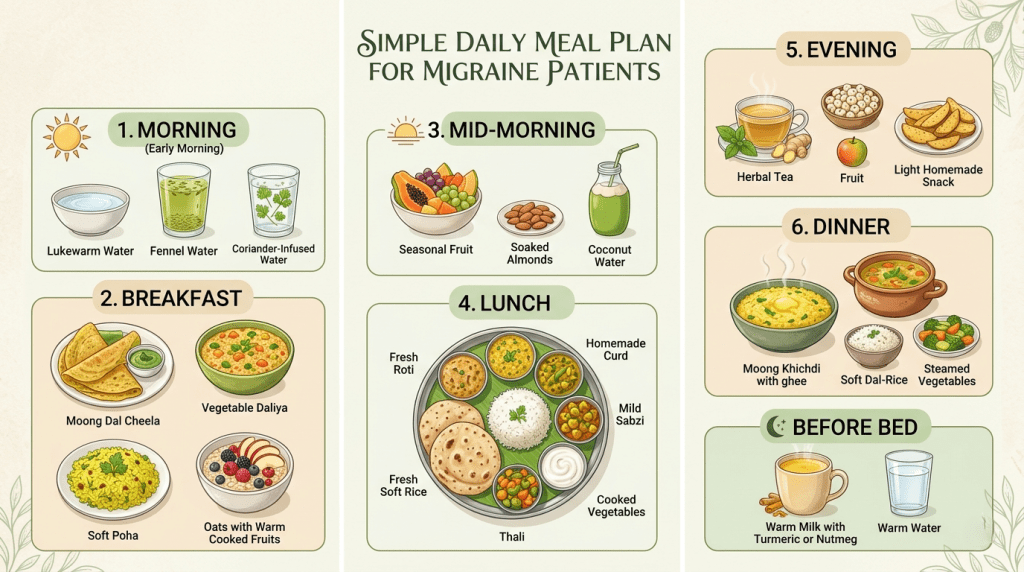
A practical Daily Meal Plan can help migraine patients maintain routine, improve digestion, and avoid common food-related triggers. This is an Ayurvedic pattern and can be adjusted based on body type, digestion, and symptoms.
Morning (After Waking Up)
Start your day gently.
Good options:
- Lukewarm water
- Coriander-infused water
- Fennel water
- Soaked raisins in warm water
Why it helps:
This supports digestion without shocking the system with caffeine first thing in the morning.
Breakfast
Never skip breakfast if you are prone to migraine.
Simple breakfast ideas:
- Moong dal cheela with light chutney
- Vegetable daliya
- Soft poha with light spices
- Oats with warm cooked fruits
- Idli with light sambar (if it suits you)
Avoid:
- Strong tea on empty stomach
- Fried breakfast
- Packaged biscuits as a meal replacement
Mid-Morning
Include a light mid-morning if there is a long gap between breakfast and lunch.
Good options:
- Coconut water (if suitable)
- Seasonal fruit
- Soaked almonds
- Light herbal drink
This helps avoid sudden hunger that may trigger migraine.
Lunch
Lunch must be the main balanced meal of the day.
Ideal lunch plate:
- Fresh roti or soft rice
- Moong dal or light dal
- Seasonal cooked vegetables
- Mild sabzi
- Small amount of homemade curd (only if it suits and preferably daytime)
- Salad in moderation if digestion is good
Why it helps:
A warm, freshly prepared lunch is usually more stable for energy than heavy food from outside.
Evening
This is the time when many people start craving tea, coffee, fried snacks, or packaged munching items.
Better evening options:
- Herbal tea
- Light roasted makhana
- Fruit
- Homemade light snack
- Vegetable soup
If you drink tea, try reducing strength and frequency gradually rather than suddenly.
Dinner
Dinner should be light and early.
Best options:
- Moong khichdi
- Light vegetable soup with soft roti
- Soft dal-rice
- Steamed vegetables with simple grains
Avoid:
- Heavy paneer dishes
- Fried food
- Restaurant leftovers
- Late-night desserts
- Very spicy dinner
Best timing:
Eat dinner at least 2–3 hours before bedtime if possible.
Before Bed
If you feel weak or hungry before sleeping, you may take:
- Warm milk with a pinch of nutmeg or turmeric (if suitable)
- Or simply warm water
This sample Daily Meal Plan is simple, sustainable, and more realistic for long-term migraine support than extreme restrictions.
Diet Alone Is Not Enough: Why You Need a Complete Ayurvedic Approach
Food is powerful, but if migraine has become frequent, severe, or long-standing, diet alone may not be enough.
This is because migraine is not just affected by one factor but several factors together, such as:
- Stress
- Poor sleep
- Digestive weakness
- Hormonal imbalance
- Toxin buildup
- Screen overuse
- Irregular routine
This is why Ayurveda focuses on a complete healing perspective instead of only a symptom-based solution.
1. Detox Support
When digestion remains irregular for an extended period of time, Ayurveda says that it can lead to toxin build-up in the body and also disturb overall balance. A guided detox approach may help the system function better.
2. Stress Management
Stress is one of the biggest hidden migraine triggers. Ayurveda includes calming therapies, routine correction, breathing support, and mind-body balance to help reduce repeated episodes.
3. Lifestyle Correction
Even the healthiest diet may not help enough if you:
- Sleep too late
- Skip meals
- Sit in front of screens for long hours
- Work under constant stress
Ayurveda heals by correcting the whole pattern and not just the headache.
This is why people who combine their diet with proper Ayurvedic guidance get much better and faster results instead of random food changes alone.
What Should You Eat Based on Your Dosha?

Personalization is one of the most effective aspects of Ayurveda. There is no one diet that works for all. It also depends on your body type, digestion, symptoms and pattern of migraine.
Here is a simple way to understand what may suit you better.
Vata Type – Warm, Grounding Foods
People with Vata dominance may often experience:
- Dryness
- Anxiety
- Irregular appetite
- Sleep disturbance
- Migraines linked with stress or missed meals
Foods that usually suit Vata type:
- Warm cooked meals
- Khichdi
- Soft rice
- Ghee in moderation
- Soups
- Stewed fruits
- Mild spices like cumin and fennel
Avoid excess:
- Dry snacks
- Cold food
- Skipping meals
- Too much raw food
Best approach:
Regular meals, warmth, and calm routine help a lot.
Pitta Type – Cooling, Non-Spicy Foods
People with Pitta dominance may often experience:
- Heat sensitivity
- Acidity
- Irritability
- Burning sensation
- Migraine worsened by spicy food or sun exposure
Foods that usually suit Pitta type:
- Cooling, freshly cooked meals
- Lauki, tori, cucumber (if suitable)
- Coconut water (if suitable)
- Sweet fruits
- Light grains
- Coriander and fennel-based drinks
Avoid excess:
- Chili
- Pickles
- Fried food
- Sour food
- Too much tea/coffee
Best approach:
Cool the body, reduce internal heat, and promote balanced digestion.
Kapha Type – Light, Low-Oil Foods
People with Kapha dominance may often experience:
- Heaviness
- Sluggish digestion
- Low energy
- Sinus-related head heaviness
- Migraine linked with congestion or overeating
Foods that are generally suitable for Kapha type:
- Light warm meals
- Vegetable soups
- Millet or light grains
- Steamed vegetables
- Ginger-based mild support
- Less oily food
Avoid excess:
- Heavy sweets
- Fried snacks
- Overeating
- Cold dairy-heavy meals
Best approach:
Keep food light, warm, and easy to digest.
A proper Migraine Diet Plan in Ayurveda works best when it is adjusted according to your dosha and symptoms rather than blindly following what you find on the internet.
How Sarvagun Ayurveda Helps You Heal Naturally
At Sarvagun Ayurveda, migraine care is approached in a more complete and personalized way. Instead of offering a one-size-fits-all diet, the focus is on understanding why migraine keeps returning and what your body actually needs to heal naturally.
How support is personalized:
1. Personalized Diet Plans
Trigger foods vary from patient to patient. There are some that are known to be complicated by acidity, some with stress, skipped meals or bad digestion. Personalized food guidance helps make the plan practical and easier to follow.
2. Dosha-Based Treatment
Ayurveda does not treat every migraine the same way. Your symptoms, digestion, body type, and routine are studied to create a more suitable healing path.
3. Expert Ayurvedic Guidance
Migraine often needs deeper support than “eat healthy.” Professional Ayurvedic guidance can help identify hidden triggers and bring extra clarity to your treatment plan.
4. Online Consultation Support
If you are unable to visit physically, you can also book an online Ayurvedic consultation to get started with personalized diet correction, routine guidance, and migraine support:
- Diet correction
- Routine guidance
- Lifestyle advice
- Ayurvedic treatment direction
If you have been seeking random home remedies without permanent relief, a systematic approach can often save time and confusion.
You can explore more about their natural healing approach through Sarvagun.
Conclusion
If migraine continues affecting your daily life, your eating habits may be playing a bigger role than you realize. A well-planned Migraine Diet Plan in Ayurveda can also help with identifying hidden food triggers, elimination, strengthening of digestion or Agni along with reduction of headache frequency and potentially rendering long-term natural relief. Even small changes to your day-to-day meals and habits can have a significant impact over the long term.
The headache waited to start for many people and so then they would just try to manage it. Ayurveda follows a different approach by focusing on the everyday habits that may be silently worsening the problem, such as skipping meals, eating oily or packaged foods, drinking excess tea or coffee, and following an irregular routine. Correcting these patterns can help support better migraine management naturally.
If your migraine has become frequent, severe, or long-lasting, it is best to seek proper guidance instead of guessing what to eat on your own. An Ayurvedic consultation will train your mind, body and spirit to understand what your unique triggers are and how you can create a diet plan that supports you long term.
FAQ’s
Yes, food habits largely trigger migraines for most of the people. The right diet can help reduce frequency and intensity of both.
Skipping meals is one of the most common mistakes. Long gaps in eating often worsen migraine symptoms.
Too much tea or coffee can be a trigger for many people, especially when taken on an empty stomach or multiple times a day.
If your migraine is linked with acidity, heat or Pitta imbalance, it may aggravate the symptoms and should be reduced in intake.
In many cases, very cold, refrigerated, or stale food may disturb digestion and may not suit migraine-prone individuals.
If your migraine is frequent or severe, diet alone may not be enough. A complete Ayurvedic plan often includes diet, detox support, stress care, and lifestyle correction.

I am an Ayurvedic doctor with over two years of hands-on experience in managing both outpatient (OPD) cases and medical emergencies. My journey in Ayurveda has equipped me to effectively diagnose and treat a wide range of conditions, from chronic kidney disease, liver failure, and cirrhosis to digestive disorders and allergic diseases like asthma, sinusitis, and allergic rhinitis.
I specialize in treating joint disorders, metabolic issues, and various lifestyle-related conditions through a root-cause-based Ayurvedic approach. I focus on personalized care—tailoring treatment plans according to each patient’s constitution, lifestyle, and medical history.
In addition to my expertise in Ayurvedic medicines and therapies like Panchakarma, I also have a sound understanding of allopathic medicine, which helps me integrate modern approaches when needed for better outcomes. In emergency situations, I stay calm under pressure and act quickly to stabilize and support patients.
I’m deeply committed to continuous learning and staying updated with the latest advancements in both Ayurveda and modern medicine. My mission is to support every patient’s journey toward lasting health, vitality, and balance through compassionate, holistic care.
