

Migraines are not just a regular headache. It can affect your work, sleep, mood, and daily routine, making everyday life challenging. Many people keep taking painkillers or trying quick remedies, but the relief is often temporary and the pain returns again. This is why many people now look for Ayurvedic treatment for migraine to understand the problem more deeply.
This cycle can be frustrating, over and over again. Ayurveda does not stop with giving temporary relief and rather, works upon the Causes of Migraine by identifying which imbalance within the body might be responsible for triggering it. Stress, poor digestion, irregular lifestyle and dosha imbalance are some of the factors that contribute to it.
At Sarvagun Ayurveda, migraine is seen as a signal from the body that something is out of balance. The approach of Ayurveda focuses on the root cause, helping the body heal in a balanced and natural manner.
What Your Body Is Trying to Tell You Through Migraine
Migraine in Ayurveda is looked at as a message from the body. It usually means something is not working in harmony. Instead of treating migraine as an isolated issue, Ayurveda connects it to overall body balance.
There are three natural energies found in the human body called Vata, Pitta and Kapha, known as doshas. These doshas help manage all body functions, from digestion and sleep to emotions and circulation. When these doshas remain in equilibrium, the body is healthy and stable. But when one or more doshas is disturbed, health problems can begin.
Migraine is often linked to this Dosha Imbalance.
- Vata controls movement, the nervous system, and mental activity
- Pitta controls heat, digestion, and intensity
- Kapha controls stability, lubrication, and heaviness
When these doshas go out of balance due to wrong food, poor routine, stress, lack of sleep, or weak digestion, the body may respond through migraine.
The Real Reasons for Migraine According to Ayurveda
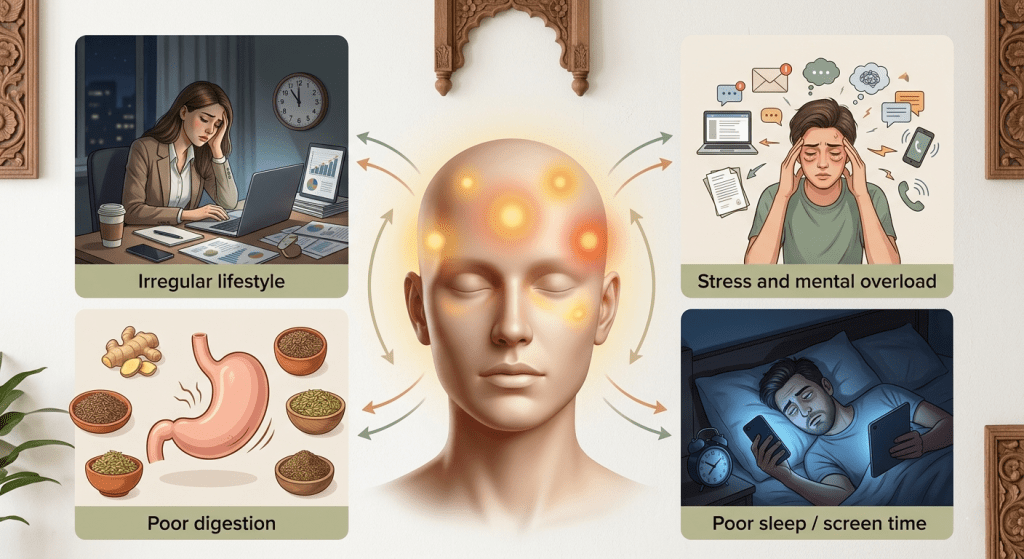
According to Ayurveda, migraine does not happen suddenly and without reason. There are usually several internal and external factors that slowly build up over time. Understanding these reasons for Migraine is important if you want long-term balance.
Irregular lifestyle
An unstable daily routine is one of the biggest reasons for migraine. Sleeping late, skipping meals, waking up tired, working continuously without rest, and eating at random times can disturb the body’s natural rhythm.
The Vata dosha is often disturbed when the body loses routine, particularly in modern city lifestyle. This causes mental restlessness, dryness and tension as well as headaches. Migraines can be common after long working hours, travelling, lack of sleep or excessive screen time — all of which can increase vata.
Stress and mental overload
Deadlines, family responsibility, emotional mental pressure and digital overload. Constant thinking, worry, overplanning, and mental exhaustion can strongly affect the nervous system.
Stress is one of the biggest migraine triggers, improving stress management in Ayurveda can be an important part of overall balance. This may create head pain, irritability, sensitivity, disturbed sleep, and a feeling of inner pressure. If the mind is overworked regularly, migraine can become more frequent.
Poor digestion
Digestion plays a more important factor in migraine than many people think it is. According to Ayurveda, weak digestion is often the root of chronic health issues.
Improperly digested food does not provide clear nutrition to the body either. It actually creates heaviness, bloating, acidity and an internal imbalance instead. Over time, this can impact the head, senses and nervous system. This is why digestion and migraine are not separated in Ayurveda.
The Role of Agni: Your Digestive Fire
Ayurveda gives great importance to Agni, which means your digestive fire. Agni is not only about digesting food — it also helps your body absorb nutrition, remove waste, and maintain balance.
When Agni is strong:
- Food digests properly
- Energy stays stable
- Toxins are reduced
- The body feels light and active
When Agni becomes weak:
- Food stays undigested
- Gas, bloating, acidity, or heaviness may increase
- Toxins start collecting in the body
- Doshas begin to get disturbed
This is where migraine may start becoming more frequent. For example, some people notice headaches after heavy meals, skipping for a long time, eating outside often, or having too much tea, coffee, spicy food, or fried items. Ayurveda connects these patterns to weakened Agni.
Ama: The Hidden Toxin Behind Chronic Headaches
Ayurveda believes that improperly digested food causes Ama. Ama is basically a sticky and harmful toxin build-up in the body caused by poor digestion and unhealthy lifestyle habits. Over time, it blocks the body’s natural channels and disturbs balance. This can contribute to recurring health problems, including migraine.
Ama may form because of:
- Overeating
- Eating too much junk food
- Sleeping immediately after meals
- Poor metabolism
- Stress during eating
- Frequent indigestion
Ama, according to Ayurveda, blocks the body’s natural channels. These channels are blocked, circulation is disturbed and nourishment is restricted. It can affect the head and nervous system, resulting in repeated migraine or chronic headaches. In many cases, supportive Panchakarma therapies are recommended in Ayurveda to help the body reduce internal toxin buildup naturally.
In modern life, Ama can build up very easily because many people:
- Eat in a hurry
- Sit for long hours
- Sleep late
- Depend on packaged or oily foods
- Ignore digestive discomfort
So, migraine is not always “just head pain.” In Ayurveda, it may also be the result of toxins, blocked channels, and internal imbalance that has been building quietly over time.
How Vata, Pitta, and Kapha Trigger Migraine Differently
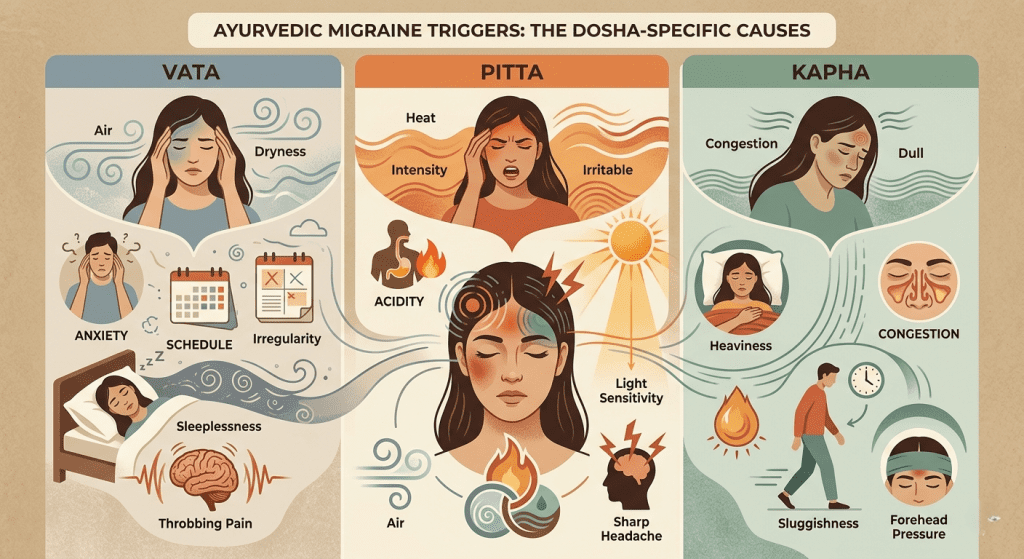
Not every migraine is identical. Some people feel throbbing pain, some feel burning, and others feel heaviness or dull pressure. Ayurveda explains this by looking at which dosha is disturbed.
Vata Imbalance
Common causes
- Stress
- Anxiety
- Lack of sleep
- Irregular meals
- Excess travel
- Too much screen time
Common symptoms
- Throbbing or shifting pain
- Dryness in the body
- Restlessness
- Light sleep
- Sensitivity to noise
- Pain that worsens with tiredness
Migraine related to Vata comes along with excess activity followed by exhaustion. It can arrive suddenly and some may find it unpredictable.
Pitta Imbalance
Common causes
- Heat exposure
- Spicy food
- Excess tea or coffee
- Anger or frustration
- Working under pressure
- Skipping meals
Common symptoms
- Burning sensation in the head
- Sharp or intense pain
- Irritability
- Sensitivity to light
- Acidity
- Feeling hot or sweaty during migraine
Pitta migraine is often stronger during hot weather, after spicy meals, or during emotional intensity.
Kapha Imbalance
Common causes
- Heaviness in the body
- Sluggish digestion
- Oily or heavy food
- Oversleeping
- Lack of physical activity
- Cold and damp weather
Common symptoms
- Dull headache
- Heaviness in the forehead
- Sleepiness
- Blocked nose or sinus heaviness
- Slow digestion
- Feeling mentally dull
Kapha migraine usually feels heavy, slow, and congested rather than sharp or intense.
Understanding your dosha pattern can help explain why your migraine behaves the way it does.
Early Warning Signs Your Doshas Are Out of Balance
Your body often gives small signs before migraine becomes intense. These signals should not be ignored.
Here are some early signs that may suggest Dosha Imbalance:
- Frequent bloating or gas
- Acidity after meals
- Disturbed or insufficient sleep
- Irritability or short temper
- Dryness in skin or body
- Heaviness in the head
- Neck stiffness
- Sensitivity to light or sound
- Feeling mentally overloaded
- Low energy without clear reason
- Irregular appetite
- Nausea or uneasiness before headache
- Sinus congestion or forehead pressure
Recognizing these signs early can help you understand what your body is trying to communicate.
Understanding the Root Cause Instead of Just Managing Pain
One of the most significant differences between Ayurveda and temporary relief methods is the approach.
Temporary methods often focus only on reducing pain for the moment. While this may help during an attack, it may not explain why the migraine keeps returning. If the internal imbalance remains the same, the pattern often continues.
Ayurveda looks deeper:
- What is disturbing your doshas
- Is digestion weak
- Is stress affecting your nervous system
- Is toxin buildup increasing
- Is your daily routine harming balance
This root-cause understanding is crucial because migraine often has a repeated pattern, not a one-time issue. If the real trigger is found and addressed, the body may begin to respond in a more stable and natural way.
How Sarvagun Ayurveda Identifies Your Migraine Cause
At Sarvagun Ayurveda, migraine is not viewed in the same way for every person. Two people can have the same pain, but the inner causes might be completely different.
At our Ayurvedic hospital in Delhi, migraine is understood through personalized dosha and lifestyle assessment.
At Sarvagun Ayurveda, the focus is on:
- Understanding your body type
- Identifying dosha imbalance
- Looking at digestion and Agni
- Studying lifestyle and sleep habits
- Reviewing food patterns and stress levels
- Observing common triggers and symptom patterns
This holistic approach helps identify whether your migraine is more linked to Vata, Pitta, Kapha, weak digestion, Ama buildup, mental overload, or a combination of factors.
Rather than only looking at the pain, Ayurveda tries to understand the full story behind it.
Simple Daily Changes to Prevent Migraine Naturally

Small lifestyle changes can make a big difference when followed consistently. Ayurveda strongly believes that daily routine plays a major role in keeping doshas balanced.
Diet tips
- Eat meals on time
- Avoid overeating
- Reduce very spicy, oily, and processed food
- Do not skip breakfast or lunch
- Prefer fresh, warm, home-cooked meals
- Stay hydrated through the day
Sleep routine
- Sleep at a regular time
- Avoid staying up too late
- Reduce mobile use before bed
- Create a calm sleep environment
- Try to wake up at a fixed time daily
Stress management
- Take short breaks during work
- Avoid continuous screen exposure
- Practice deep breathing or meditation
- Spend time in calm surroundings
- Do not ignore emotional exhaustion
Daily habits
- Avoid eating when stressed or distracted
- Include gentle physical activity like walking or yoga
- Do not suppress hunger, sleep, or natural urges
- Keep a healthy daily routine as much as possible
These simple habits may help reduce the factors that often disturb the doshas and trigger migraine.
Conclusion
Migraine is often your body’s way of asking for attention, balance and deeper care. According to Ayurveda, repeated migraine can be linked to Dosha Imbalance, weak digestion, Ama buildup, stress, and unhealthy routine. Understanding these Causes of Migraine is important if you want to move beyond temporary relief and support your body more naturally.
Sarvagun Ayurveda takes a root-cause approach towards migraine which respects your unique body pattern and lifestyle. The better we understand the body, the more meaningful, personalized and sustainable healing is.
If migraine has become a repeated struggle in your life, listening to what your body is trying to say may be the first important step.
FAQ’s
Yes, Ayurveda links weak digestion with migraine very strongly. When food is not digested properly, toxins and imbalance can build up in the body.
Migraines can involve Vata, Pitta, or Kapha, but many cases are often linked with Vata and Pitta imbalance.
Yes, stress is one of the most common triggers. It can aggravate out of balance doshas and disturb the nervous system.
The current migraine will come again and again if the root cause like poor routine, digestion issues or dosha imbalance is not addressed.
Yes, small adjustments to diet, sleep schedule, stress and routine can promote greater balance, which might help decrease migraine triggers.

I’m Dr. Anjali Sangar, B.A.M.S., a dedicated Ayurveda physician affiliated with the Central Ayurveda Research Institute in New Delhi. I completed my training at Ch. Brahm Prakash Ayurved Charak Sansthan, and I offer holistic health consultations with a focus on preventive care, lifestyle optimization, and managing chronic conditions through Ayurvedic principles.
I’m passionate about spreading awareness of Ayurveda and actively participate in community health programs and educational series like “Purpose of Ayurveda.” My goal is to empower individuals with the knowledge and tools to live healthier lives through time-tested Ayurvedic wisdom. I’m proud to serve the New Delhi community with accessible, evidence-based Ayurvedic care.
